.  
CONSERVATION

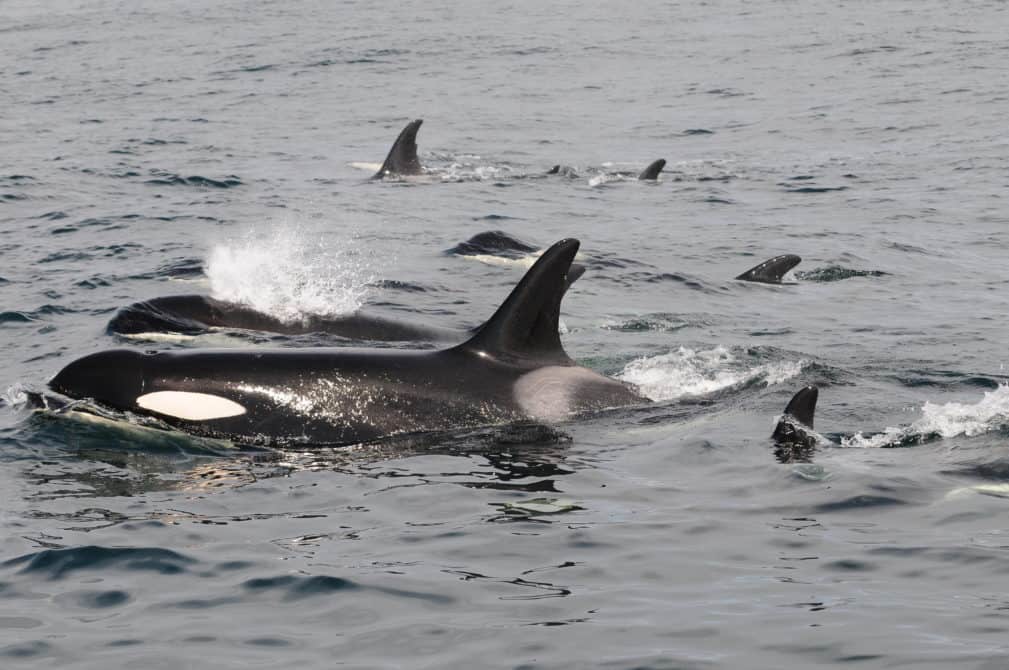
Up until 25 years ago, killer whales were widely feared and largely misunderstood. Fishermen and mariners often shot them on sight. With the introduction of killer whales into aquariums and oceanariums in the 1960's and 70's, public interest and a better understanding of these animals grew. They were no longer thought of as ferocious beasts but rather as intelligent and inquisitive creatures. Today, however, we are threatening them in new ways. Increasing boat traffic, over-fishing, pollution and other human activities all potentially threaten whales and their fragile environment.


photo L. Barrett-Lennard and K. Heise

VESSEL TRAFFIC
With the increase of vessel traffic comes the increase of noise and disturbance in the killer whales' habitat. Long-term effects of vessel disturbance on killer whales are unknown, but short-term effects have been documented. Other things that contribute to noise pollution are:

  • seismic activity
  • marine industrial equipment like coastal oil rigs
  • military exercises like low frequency sonar
  • underwater construction like pile drivers
  • seal scarers that fishermen use to keep seals and sea lions away from their nets

Whales rely heavily on sound to communicate and navigate. Underwater noise pollution from boats and other human activities has the potential to interfere with the whales' ability to communicate with one another while foraging, or mask echolocation signals the whales use to locate prey.
In addition to all the noise pollution, killer whales also face the danger of ship strikes and being hit by boat propellers.
 
This fin whale was stuck by an Alaskan cruise ship and carried into Vancouver harbour. Photo by J.K. Ford

DECREASING FOOD SUPPLIES


This graph shows that Chinook appears to be the main staple of the resident killer whale's diet


  In recent years, the population of British Columbia and Washington's salmon stocks has been declining dramatically. Declines could be due to degradation of spawning habitat, reduced ocean survival and over-fishing. Resident killer whale populations feed preferentially on these fish. In particular, chinook salmon are their favourite salmonid species. Returns of chinook to many coastal spawning streams and rivers have been poor in recent years. How this reduction in salmon availability may affect resident killer whales in the long run is difficult to say. They may have to switch their diet to another species or shift their distribution patterns to other areas where food is more plentiful. Transient killer whale prey is very plentiful in B.C. and Washington, however, in areas like Alaska and the Aleutian Islands, populations of seals and sea lions have declined sharply. This may be affecting transient killer whales in those areas.

These sea lions have hauled out in front of a pulp mill which are the primary source of dioxins and furans in the west coast marine environment.
 Photo by J.K. Ford


POLLUTION

West Coast killer whales have recently been found to be the most contaminated marine mammals in the world. Synthetic chemicals such as PCBs have been banned in Canada and the US for years but their use is still occurring in areas around the world. These chemicals are very long lived and can remain in our atmosphere for decades after their production. Once they get in the marine environment they bioaccumulate up the food chain. Marine mammals tend to be top predators and therefore consume large amounts of contaminated food. Whether or not these high levels are a serious threat to the health and survival of killer whales is unknown at this time. But PCBs have been known to cause weakened immune systems and to impair reproduction in harbour seals leading to an increased susceptibility to disease.

MAKING A DIFFERENCE

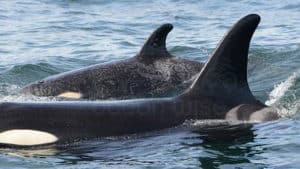
The 2001 killer whale census indicates that after two decades of slow but steady growth the northern resident population is leveling off or perhaps even declining slightly. However, last year seven members of the southern resident population disappeared. This population now totals only 80 whales; a 20% decline over five years. There is probably no single factor that could be the cause of a decline in killer whale populations. The southern resident population has recently been listed by the Committee of the Status of Endangered Wildlife in Canada (COSEWIC) as "endangered", the northern resident and transient populations as "threatened" and the offshore population as a species of "special concern".


photo by L. Barrett-Lennard and K. Heise

Becoming a member of the BC Wild Killer Whale Adoption Program is certainly one way that you can be a part of ongoing killer whale research. But what about in your every day life? How else can YOU help in the efforts to improve the state of our oceans and ultimately the future survival of West Coast killer whales?

Here are some suggestions:

Volunteer at a local aquarium or zoo and help to educate the public about the history and biology of killer whales and other marine life. You can help to inform them about how so many human activities are detrimental to their health and the habitats they live in.
Become a member of a local Streamkeepers organization and help to increase efforts to rehabilitate old salmon habitat.
To help protect salmon and other fish species that are declining in our oceans be aware of the type of seafood you are eating. To find out what seafood is good for you and good for the oceans check out the Monterey Bay Seafood Watch Guide.
It's not just factories and manufacturers that are disposing of harmful chemicals into the oceans. Every time you dump toxic household cleaning products down your sink, use pesticides in your garden, or spill gasoline or oil, you too are contributing to the pollution that is appearing in our oceans and eventually in the whales. Be aware of what you are putting down the drain. You can help to make others aware by joining the Yellow Fish Road Storm Drain Marking Program which reminds people that everything they put in their sinks, bathtubs, toilets, etc. ends up in the storm drains and eventually our streams, lakes and oceans.
Be aware of how your every day actions affect the environment. Read Environment Canada's Down to Earth Choices. This is a simple-to-use guide that offers hundreds of tips and suggestions on environmentally sensitive habits for individuals to practice every day and everywhere.
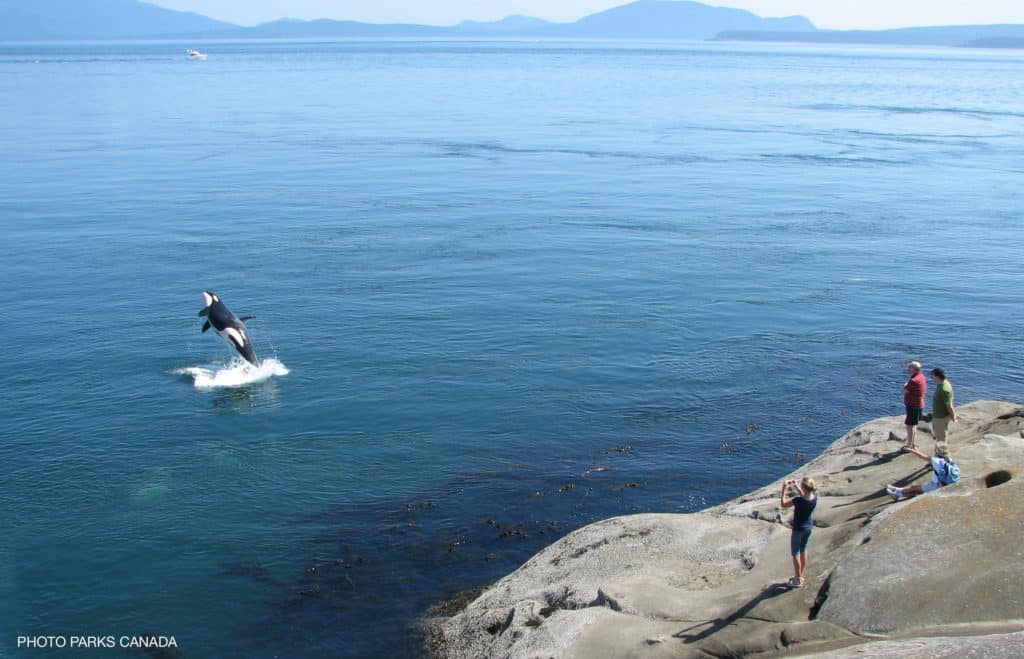
If you decide to go whale watching, make sure the company you go with is "whale wise" and follows other environmental codes of ethics. All boats, both commercial and recreational, should adhere to the whale watching guidelines. For more information about watching whales and other marine wildlife, check out www.salishsea.ca.  See "whale watching" on the next page.